Thursday, June 9, 2011

Reefer journal: Container Refrigeration Temperature Recording Systems (Part 3)


Issue : April-June 2005


By C. Maheshwar
Faculty, Training Ship Chanakya
Navi Mumbai

C.Maheshwar is a marine engineer, from Marine Engineering College, Kolkata, (DMET) 1980. He has sailed on board foreign - going ships of Shipping Corporation of India Ltd., from 1980 to 1997, the last 5 years of which were as chief engineer officer. Ashore, he has worked from 1997 to 1999 with the Taj Group of Hotels as chief engineer of Taj Connemara Hotel, Chennai, and as customer service manager, Reefer Container Group of Carrier Transicold for the region of South Asia from 1999 to 2001. Currently, he is working as engineering faculty at TS Chanakya, Navi Mumbai, a Merchant Navy Training Institute, belonging to the Govt. of India and affliated to University of Mumbai and IGNOU. He is a consultant for Anglo-Eastern Maritime Training Centre and conducts training programmes on reefer containers for seagoing engineers on a regular basis. He can be contacted at
cmaheshwar@hotmail.com

In this issue, we examine the evolution of CA as a system, how it is different from Modified Atmosphere systems, various forms of Controlled Atmosphere systems available in the current reefer market and the various additional components involved.
Basic Concepts

When a fruit or vegetable is harvested from the tree, it is still living. Chemical reactions are going one within it, with liberation of gases and heat. In other words, it is still respiring. This respiration process contributes to aging or senescence of the fruit.


Respiration of fruit :
C6H12O6 + 6 O2 = 6 CO2 + 6 H2O + Heat


If we are able to reduce the respiration rate, we can reduce the speed of chemical reactions going on within the fruit and can delay the aging of the fruit.


The idea of CA is to ensure conservation of perishables not only by refrigeration but also by changing the gas concentration of the air inside the refrigerated chamber. For the purpose of conservation the oxygen level is reduced to approx. 2-3% (normal air 21%) and the carbon dioxide level is increased to 5-15 % (normal air 0.03 %). The gas mixtures that provide the best conservation depend on the crop but may vary with variety, origin and harvest date. The most common fruits that are stored under CA on shore are apples and pears. It is to be remembered that CA is an additional feature provided to supplement refrigeration.


By changing the atmosphere in the correct way, the respiration of the fruit is reduced and preservation is better. The transit times can therefore be longer, so that fruit, normally transported by air, can be shipped by sea or truck. Another possibility is to harvest riper fruit in order to transport it in better quality than earlier.

The rate of respiration falls rapidly below 9% of Oxygen content in the atmosphere. At 2% Oxygen level, the rate of respiration is as low as 25%. Most of the products require Oxygen content close to 2% for better preservation in addition to refrigeration.

Atmosphere changes must however be made with care as oxygen levels that are too low, as well as carbon dioxide levels that are too high, can result in damage to the fruit. Ethylene, which is a gas that is produced by many fruits, but which also accelerates the ripening process, also has to be removed from the atmosphere (green bananas for example are treated with ethylene in the ripening stores to get them ready for sale).
What is Controlled Atmosphere? How is it Different from Modified Atmosphere?

* Controlled Atmosphere
– The control of the chemical composition of the atmosphere surrounding a commodity by the continual addition or removal of gases.
* Modified Atmosphere
– The one time surrounding of a commodity with a mixture of calibrated gases prior to shipment.

Applications of Controlled Atmosphere

For several years now, Controlled Atmosphere (CA) has become more and more important in the refrigerated transportation of perishables. While in the beginning CA was almost unknown, it has now become a quite common addition to normal refrigeration in several fruit trades. In the reefer vessel market CA is mostly used by banana companies like Chiquita and Dole for the transport of bananas and other fruits from Latin America to Europe. Apples from New Zealand to Europe and stone fruit (e. g. peaches, nectarines) from Chile to the US are also shipped in reefer containers under CA. Each product has its own requirement of Oxygen and Carbondi- oxide percentages ranging from 1 to 10% with varying degree of potential benefit, ranging from slight to very good.


Various Makes & Models of CA Systems

The first applications of CA on shore simply used the respiration of the fruit to lower the oxygen level and increase the carbon dioxide level. The fruit was placed in the gastight store, and the atmosphere changed by itself. With a normal CA store for apples it took several weeks to bring down the oxygen level to the desired 2%. To limit the carbon dioxide level, lime was simply placed inside the CA room. To increase the oxygen level if necessary, fresh air was supplied to the room.

Nowadays the pull-down of the atmosphere is usually achieved by flushing the room with nitrogen (normal air 78 % N2). The nitrogen is either separated from ambient air (Figure 1) or is delivered in tanks or trucks for an initial filling. Nitrogen separators can be of the membrane type or Pressure-Swing-Adsorption (PSA) systems. In the case of membrane separators, a membrane which has different permeability for oxygen and nitrogen is used to separate nitrogen from compressed air. In PSA systems, activated carbon is used to adsorb oxygen at high pressure and is reactivated at low pressure. Two adsorbers are combined with one adsorbing and the other reactivating in exchange.


For the limitation of carbon dioxide levels two different principles are used:

* flushing with nitrogen and
* carbon dioxide scrubbers.

The flushing system is normally used when a nitrogen separator is present. Due to the fact that the nitrogen produced by these separators still has oxygen content of approximately 2–3 %, the oxygen level cannot be reduced significantly lower than this level when carbon dioxide is flushed out of the room (Figure 1).

Carbon dioxide scrubbers are mainly PSA systems, but lime scrubbers are also used. When carbon dioxide scrubbers are used, attention must be paid to the ethylene level, which might increase in this case. Ethylene is not a problem for flushing systems, as both the ethylene and the carbon dioxide are flushed out of the room. The disadvantages of nitrogen flushing are the high-energy consumption of nitrogen separators and the fact that the capacity of the separator has to be designed for carbon dioxide limitation, where often more nitrogen is necessary than for atmosphere pull-down.

Some manufacturers offer ethylene scrubbers on a PSA base. Catalytic ethylene burners are also available.

The CA room has to be as gastight as possible in order to prevent ambient air (oxygen) from entering. Due to the injection of nitrogen for atmosphere pull-down or carbon dioxide flushing there has to be a pressure relief valve, otherwise the room would be blown up and destroyed.
TransFRESH

California based TransFRESH Corporation has been the biggest provider of CA services for some years. The Tectrol CA system came into the market at the end of 1990. Tectrol CA is used primarily with avocados and deciduous fruit. Other cargoes include asparagus, mangoes, melons and mixed vegetable shipments.

The Tectrol system is not able to build up its own atmosphere. An initial gas mixture is injected into the container after loading. The Tectrol system is designed to maintain this atmosphere by supplying fresh air and carbon dioxide scrubbing. This requires containers which are extremely gas tight with minimal leakage.


The main advantage of the Tectrol system is the low investment cost. Only an investment of about US $ 700 is necessary to fit a container with the basic installations. These include:

* Two port assemblies which are built into opposite ends of the container sidewalls. These plugs are temporarily removed to allow injection of the initial specified atmosphere.
* An extruded aluminium door track is built into the container door frame. In case of a transport, a large plastic curtain seals the rear container door opening. The curtain is snap-sealed into the track with a stiff plastic ribbon.
* Casing and wiring for the controller. The controller records atmosphere and other performance information during transit. It is only mounted to the container in case of a CA transport. Once the container has reached its destination the controller is removed and returned to TransFRESH for data retrieval.
* Facilities for fitting a lime based carbon dioxide scrubber

The disadvantage of the Tectrol system is that it is based on fruit respiration and therefore is not a standalone system. A TransFRESH station is needed at the loading port to supply the container with the necessary equipment and the initial atmosphere. On the other hand, this has turned out to be an advantage, as the containers as well as the cargo are inspected carefully before shipment commences. This results in a very good quality of transported goods and very few losses.
Freshtainer

Freshtainer, which is a part of the Austrian Welz group offers one of the more sophisticated CA systems that was available till recently: the INTAC IV. The system features a PSA nitrogen seperator, a carbon-di-oxide scrubber and an ethylene scrubber. Humidification and dehumidification are also available. Now, Freshtainer does not operate the INTAC IV containers itself anymore, but gives them on lease to large customers. Before introducing the INTAC IV system, the company already had an older INTAC III system in operation, which was based on carrying nitrogen and carbon dioxide in cylinders. Since the beginning of 1995 Freshtainer and Sabroe Reefer Cool have started to collaborate. The original Freshtainer's INTAC IV system has been redesigned to fit into a Sabroe TNE 508 refrigeration unit (formerly Klinge).

There are three options available:

* The basic option is designed for oxygen control and moderate carbon dioxide control by using a PSA nitrogen separator. The humidity level can also be modified. The unit is placed beside the reefer unit, so that no cargo space is lost.
* Option two offers the supply of carbon dioxide from two or four cylinders, which are placed just opposite the nitrogen separator.
* Alternatively option three adds a carbon dioxide and an ethylene scrubber instead of the CO2 cylinders. Depending on the installed option, the system weights 150 - 320 kg.

In order to guarantee the air tightness of the container, Freshtainer's own containers use a special one wing door instead of the normal two wing door. In case of the Freshtainer/Sabroe system, provisions concerning air tightness must be taken by the container manufacturer/ operator, for example, by using a plastic curtain.

With all options installed, the Freshtainer/Sabroe unit is able to build up and keep the inside atmosphere down to 1% of oxygen, between 0 % and 80 % of carbon dioxide at a humidity of 60 % to 98 %.

Carrier Transicold

In November 1994, Carrier Transicold unveiled its own CA system is based on Carrier's NT reefer machinery and fitted completely into it. The additional weight is 70 kg. The system consists of a membrane type nitrogen separator including the necessary oil-less air compressor. The membrane itself was developed in conjunction with Medal (DuPont). The controller for atmosphere control is of the same type as for temperature control, so that the two controllers can even be interchanged. The data logger records oxygen and carbon dioxide levels as well as the air humidity inside the container, in addition to the temperature setpoint, supply air and return air temperatures.
System Operation

Atmospheric air is drawn through an air intake filter to remove contaminants before entering an oil-less air compressor. Once it is compressed, air is feed into a condensing line where moisture is removed. It then passes through a filter assembly where the moisture is drained away. To enhance the efficiency of seperation, it is passed through an air heater before entering the membrane seperator. In the membrane seperator, nitrogen is separated from the other gases and delivered inside the container while the other separated gases are simply vented to the outside atmosphere.
Principle of Seperation

The membrane seperator contains thousands of small hollow-fibres, approximately twice the diameter of human hairs that make up a semi-permeable membrane bundle. Similar to the shell and tube heat exchanger, the membrane bundle is housed in a cylindrical shell with a feed inlet port at one end and two vent ports- one each at the opposite end and on the side of the housing. Compressed air used as a supply gas is fed at the inlet of the seperator and flows inside the hollow fibres towards the opposite end vent port. Each of the air components has its own permeation rate that is a function of its ability to dissolve and diffuse through a porous medium. This characteristic permeation rate allows fast gases like oxygen to separate out from slow gases like nitrogen.

The ability of a membrane to separate gases is determined by the rate of permeation of each feed gas component, which is a function of the individual components' solubility in the membrane material and the rate of diffusion through the membrane wall. Gases with a higher solubility in the membrane material and are small in molecular size, permeate faster than large, less soluble gases. The higher the solubility, the more efficient is the seperation process is. The driving force behind the seperation process is the difference between the gas components' partial pressures that make up the feed gas.


Both oxygen and carbon dioxide levels are controlled by flushing with nitrogen. An automatic purity control guarantees the proper function of the system.

It is also possible to connect a CO2 source to the container (cylinders inside and outside the container). The controller is already designed for CO2 supply, and a magnetic valve is installed to which the CO2 source can be connected.

Graaff

The German container manufacturer Graaff was known to have developed the "Pacas" container in conjunction with Permea Inc.

Graaff now offers a modular CA system. The simplest option provides only an uncontrolled nitrogen separator without data logging. By adding a controller, a data logger, a carbon dioxide scrubber and/or a humidification/ dehumidification unit, the CA system can be adapted exactly to customer's requirements.
Freshcon eshcon

Hamburg based Freshcon, a company belonging to the Sietas shipyard, also developed a CA unit in cooperation with Isolcell Italia (CA) and Noske-Kaeser (refrigeration). The system provides a membrane based nitrogen separator, a PSA carbon dioxide scrubber and a catalytic ethylene scrubber.
Isolcel

Isolcell is one of the biggest manufacturers of CA equipment and CA stores in Europe. Beside the Freshcon container, which uses Isolcell equipment for atmosphere control, the company offers its own CA container.

The CA system consists of a permeable membrane nitrogen separator, a carbon dioxide scrubber and an ethylene converter. The components are installed inside the container beside the reefer machinery casing, so no cargo space is lost. A controller and data logger are installed and are accessible from outside.

To increase the air tightness of the container, a plastic curtain is fitted magnetically into the door opening. This aims to reduce leakage to 600 l/h at 20 mm WG.
CONAIR plus

G+H Montage, who are known for building CONAIR stacks for cold air supply to porthole containers on vessels, offer a CA system for porthole containers. The CA equipment consists of a nitrogen separator producing 30 m3/h N2 at a purity of 97%, a carbon dioxide scrubber and a catalytic ethylene converter. This system is connected to the CONAIR stack, which has been specially sealed in order to improve gas tightness.

The main problem with this system is the air tightness of the containers, which are normal porthole containers without additional sealings. The capacity of the nitrogen separator is sufficient to lower the oxygen concentration to approx. 3 % even with not fully air tight containers, but high carbon dioxide levels will not be reached due to permanent nitrogen flushing.
Analysis

The most successful system at the moment, the TransFRESH Tectrol system, is the one with the lowest initial investment cost, but with the highest operating cost.

The different CA systems for container application show a wide range of different approaches. These relate to the technical equipment of the containers as well as the price. They range from the simple TransFRESH Tectrol system, which needs an initial atmosphere filling after loading, to Freshtainer's sophisticated INTAC IV system, which offers almost all opportunities for atmosphere control.

All in all, it can be found, that prices for well equipped CA containers like Freshtainer or Freshcon are still too high to be accepted on the market. The most successful TransFRESH Tectrol system is the simplest one with the lowest initial investment. Due to decreasing prices for stand-alone CA containers, it is expected that more of these units will get into operation in the future.
Safety

Since we are dealing with atmospheres which are deficient in oxygen, we need to be very cautious whenever we are working on Controlled Atmosphere systems. Awareness of the ill effects of exposure to Oxygen-deficient atmospheres is crucial.

The following are the effects of various degrees of reducing oxygen content in the atmosphere and the affects on human beings.

* 15 - 19% O2 – Co-ordination impaired
* 12 - 14% O2 – Perception and judgement impaired
* 10 - 12% O2 – Performance failure, poor judgement, onset of Cyanosis
* 8 - 10% O2 – Mental failure, unconsciousness
* 6 - 8% O2 – 100% fatal after 8 minutes exposure
* 4% O2 – Coma in 40secs, convulsions, death The following precautions are recommended when working on Controlled and Modified Atmospheres:
* Never assume the atmosphere is safe
* Vent before entering
– 20 minutes minimum
– Remain clear of open doors
– Remain clear of air vents
– Even if safe yesterday
* Work in pairs when entering Modified/Controlled Atmosphere Units

Most of the containers are now equipped with a safety door lock which allows the rear doors of the container to be opened only after the oxygen content in the container has reached 20.3% and locks the container at oxygen percentage below 19.8%. The locking and unlocking is achieved through a solenoid valve which pushes out a locking lever and the signal for the same is obtained from the controller based on the sensed value of the oxygen percentage inside the container.
Pre-Trip Kit

Prior to every loaded trip of the reefer container using CA System, the following items comprising the Pre-Trip Kit must be replaced.

* Rear Door Curtain
* Ribbon
* Air Filter Element
* Sample Air filter Element
* Safety Precautions Label (Decal)

Benefits of Controlled Atmosphere

* Reduces respiration
– Ethylene production retarded
– higher natural sugar content.
* Retards senescence (ripening / aging)
– associated softening and compositional changes
* Alleviates certain physiological storage disorders.
* Retards some pathogens and consequential decay.
* Provides insect control.
* Permits longer tree ripening
* Better product quality at final destination
* Less spoilage during transport
* Broader range of cargo can be shipped
* Permits extended post harvest shipping and storage times.

Controlled Atmosphere - A Panacea!

Controlled Atmosphere System is not a panacea. Temperature control is of paramount importance. Each product has its own requirement of oxygen and carbondi- oxide content to be maintained which needs to be known beforehand. All products are not equal. The product has to be of good quality at the time of loading inside the refrigerated chamber. Correct product quality is maintained by adoption of correct handling practices all through the product's post-harvest life - from the field to the consumer. Controlled Atmosphere Systems cannot improve the product quality. It can only maintain the product quality by prolonging the life of the product and retaining the freshness.

Individual pieces of fruit cargoes should be packed in cardboard boxes with holes all around so as to allow ingress of cold air inside the box and touch the individual pieces of cargo. Similarly each individual piece of fruit cargo should be properly protected to prevent any mechanical injury by wrapping with a suitable material. The ideal material of packing each individual fruit is thin porous paper which allows passage of cold air through the pores and touch the cargo. Alternatively, plastic nets may be used. Totally enclosed plastic bags should not be used, plastic being a non-conductor of heat does not allow passage of cold air to touch the individual pieces of cargo. As a result, heat accumulation and gas accumulation takes place inside the plastic bag causing deterioration and damage. If plastic bags are used, there must be sufficient number of holes to allow cold air to pass through.

Proper loading procedures should be followed along with the necessary precautions. Cargo pallets or crates should be evenly stacked with uniform space all around the boxes. Formation of hot pockets should be prevented. Proper lashing of stacked cargo should be done. Suitable separating dunnage should be used to obviate any possibility of shifting of cargo during transportation causing formation of hot pockets. Packing material should have sufficient stacking strength to withstand the weight of the upper tiers of cargo. This is particularly important if the cargo is to be transported across oceans in a refrigerated container, where it is subjected to severe weather conditions and mechanical movement due to rolling, pitching, pounding, panting, yawing and heaving.

If the product is of inferior quality at the time of harvesting or not packed in the right manner or not stowed in the right manner inside the refrigerated chamber or if the temperature is not maintained accurately within a narrow range, even Controlled Atmosphere System cannot prevent the cargo from deterioration or damage. GARBAGE IN – GARBAGE OUT!
References

1. www.carrier.transicold.com
2. www.thermoking.com
3. Dr. Ing. Yves Wild, Overview on Controlled Atmosphere Transportation in Containers, 19th Congress of International Institute of Refrigeration, The Hague, Netherlands, 23rd August 1995.
4. Brian M McGregor, Tropical Products Transport Handbook, United States Department of Agriculture, 1989.
5. Robert E Hardenburg, Alley E Watada and Chien Yi Wang, The Commercial Storage of Fruits, Vegetables and Florist and Nursery Stocks, United States Department of Agriculture, 1986.
6. Vick Kenneth W, For Economic, Abundant and Varied Fruits, Agricultural Research Journal, Jan 1993, Volume 43, Issue 1.
7. Devon Zagary and Adel A Kader, Controlled Atmosphere Handbook, Carrier Transicold, USA, 1999.


Wednesday, June 8, 2011

Reefer journal: Container Refrigeration Temperature Recording Systems (Concluding Part 4)


Issue : July-September 2005


Container Refrigeration
Temperature Recording Systems (Concluding Part 4)


By C. Maheshwar
Faculty, Training Ship Chanakya
Navi Mumbai

C. Maheshwar is a marine engineer, from Marine Engineering College, Kolkata, (DMET) 1980. He has sailed on board foreign - going ships of Shipping Corporation of India Ltd., from 1980 to 1997, the last 5 years of which were as chief engineer officer. Ashore, he has worked from 1997 to 1999 with the Taj Group of Hotels as chief engineer of Taj Connemara Hotel, Chennai, and as customer service manager, Reefer Container Group of Carrier Transicold for the region of South Asia from 1999 to 2001. Currently, he is working as engineering faculty at TS Chanakya, Navi Mumbai, a Merchant Navy Training Institute, belonging to the Govt. of India and affliated to University of Mumbai and IGNOU. He is a consultant for Anglo-Eastern Maritime Training Centre and conducts training programmes on reefer containers for seagoing engineers on a regular basis. He can be contacted at cmaheshwar@hotmail.com

In this concluding part we will examine the evolution of the various temperature recording systems used in reefer containers, right from the days of the manually maintained log sheets to the currently used remote monitoring systems and the possibility of using satellite transmission of data for monitoring and control from a shore establishment, which is already under trial.

Temperature Measurement implies on the spot instantaneous display of the temperature of the air inside the reefer container. The temperature measurement of air inside the reefer container is done at two locations - one at the return air i.e., at the entry to the evaporator coil and one at the supply air which is at the exit of the evaporator coil. Under normal working conditions, a temperature difference of 2-3°C is always permissible between the return and the supply. For a marine reefer container, the return is from top and supply is from bottom and for truck refrigeration, it is the other way around. When return is at the top, it aids the natural circulation of air, i.e., hot air goes upwards and cold air sinks to the bottom. The temperature difference is more pronounced in case of chilled cargoes like fruits and vegetables which liberate heat due to the chemical and physiological changes taking place within the cargo.

Temperature Recording is required for future reference. At the end of a loaded trip, if it is noticed that there is a deterioration or damage to the cargo, the record of the temperature maintained inside the container and performance of the reefer machinery is called for. This is done to ascertain the cause of the damage and extent of the damage to pinpoint the responsible party. The record of temperature maintenance is called for by the courts to find out the genuineness of cargo damage claims.

Evolution of Temperature Recording Systems
Manual Logsheet


In the earlier days, when there was no recording mechanism, the only available document was the reefer container temperature log sheet. Temperature was physically and individually checked and logged down in a pre-printed format. The temperatures were logged down at two fixed timings during the day - one at AM and one at PM. This was accepted as evidence in the court of law. However, this was not 100% reliable as the log sheet could be tampered with, the temperatures recorded could be wrong. An entire new log sheet could be fabricated to protect the ship's staff and the carrier. In spite of this, even in today's world, some shipping companies insist on mandatory maintenance of the daily temperature log.
Partlow Chart Recorder

The daily temperature log started to get supplemented by an additional feature - Partlow Recorder. This consisted of a temperature sensor (mercury filled) fitted to the return air side grill which would be permanently connected to a stylus. Variation in temperature sensed by the sensor would cause a corresponding and proportional movement of the stylus. A paper chart was fitted to a metal base on which the stylus would move and make a mark (an impression). The Partlow chart would be calibrated in 0C or 0F as desired by the shipper. The entire chart would rotate continuously about a center at a fixed speed, the movement of rotation provided by a hand wound clock mechanism. Once fully wound, the clock would complete one full circle and come back to the starting point after 31 days. The entire chart would be divided into 31 segments, each representing one day of 24 hours. Thus, with one chart, we could have a continuous record of 31 days.

Since there is no electronics involved and there is no requirement of external power source, this system would work as a stand alone system and the recording would go on irrespective of whether the container is loaded or not, the machinery is running or not, whether power supply is available or not. At the end of the 31 day period, the chart could be replaced with a new one. The required number of photocopies of the completed chart could be taken and distributed to the concerned parties and kept as a permanent record. Since the chart was exposed to the atmospheric elements, the markings being impermanent, would fade away and become incomprehensible after some time, like a thermal fax paper. So, it is important to take a photocopy of the completed Partlow chart at the earliest and preserve it.

A Partlow chart was accepted as evidence in the court of law for deciding the genuineness of cargo damage claims, ascertaining the extent of damage and awarding compensation to the aggrieved party. Also, at a glance at the Partlow chart, we could know the way the temperature was maintained inside the container for the last 31 days. We could identify temperature fluctuations due to defrosting cycles shown by periodic peaks, not running of the machinery due to power shutdowns or otherwise shown by a slow rise of temperature indicated by a gradual upward slope and so on.

However, even the Partlow chart was not foolproof. It could be tampered by simply lifting up the stylus for the required period and making the required temperature marking later. Ship's staff and carriers started protecting their interests by making their own charts to fudge the actual information. The actual temperature fluctuations due to machinery breakdown or power shutdown could be camouflaged and concealed. So, the Partlow chart was no longer accepted as foolproof and sacrosanct. Further, the Partlow mechanism itself needed regular calibration.

Subsequent variations of the Partlow mechanism were made by replacing the mechanically operated handwound clock mechanism by a replaceable battery. An electronic Partlow was developed which could give better precision as the temperature signal was converted into electronic signals and fed onto the chart. So, mechanical sluggishness of the Partlow was ruled out.

Electronic Data Recorders / Data Loggers

In view of the increased container trade, there was a tremendous pressure on the manufacturers to come out with a 100% tamperproof mechanism like the Black Box in the aircraft which could store the temperature signals as they were sensed without being tampered.

This gave rise to a Data Recorder also called Datacorder or Data Logger. Two additional sensors were fitted, one each at the supply side and the return side to record the supply and the return temperatures of the air after and before the evaporator coils respectively. These sensors were fitted next to the controller sensors. They would record the same temperatures as recorded by the controller sensors being located in the same vicinity and close proximity. The signals would be fed into an electronically sealed box called Datacorder fitted with a memory device. The capacity of the Datacorder would be sufficient to store data continuously from the container for about three years. In addition to the supply and return air temperatures, change of set point, alarms and all other events would be recorded in the Datacorder. Under normal conditions, the recording would be available with the main power supply, a low dc voltage signal being taken to power the recording unit. Back up power would be provided through a rechargeable, replaceable nickel cadmium battery pack with a fixed life. When main power supply is available, the battery would be charged through a charging circuit.


Unlike the circular temperature charts, the data loggers record the temperatures digitally which provides only a discrete number of measured values. The normal recording interval is one hour. However special events such as alarms, defrosting process etc. are all saved explicitly. Depending on the type of logger and the way it is programmed, the recorded temperature data may be snapshot values or may be average values over a defined period of time.

Today, a considerable proportion of refrigerated containers are equipped with data loggers of this type and not with the traditional chart recorders, which have become redundant. The trend today is away from chart recorders and toward data loggers. Some container owners, however insist on having a visual display of temperature in the form of Partlow chart, which when provided would be in addition to the electronic data logger, which has become a default feature.
Temperature Recorders Inside the Cargo

Nowadays, several additional data loggers are often placed within the load when transporting refrigerated cargo in containers. These are used to directly monitor the temperatures of the cargo inside the container during transport and allow this data to be made available to the recipient of the goods. These loggers can provide evidence of periods of insufficient refrigeration leading to damage. For certain highly sensitive products (for example, blood plasma) the use of such loggers is required as proof that the cold chain has not been broken at any time.


All the reefer containers carrying refrigerated cargo especially fruits and vegetables to United States are required to have special USDA (United States Department of Agriculture) sensors which are actually placed inside the cargo at various locations in the container. The unit is equipped with a receptacle to receive the temperature signals and connect to the data recorder to provide a continuous record. Only when the temperature fluctuations of the cargo during the period of passage is within limits, will the cargo be accepted and allowed to land inside United States. This is to prevent landing of fruit-fly infested cargo in US teritory.

The devices currently available on the market range from clockwork-driven analog recorders that write data on a strip of paper to digital data loggers that use infrared interfaces to transfer the data. The accuracy of the analog devices is approximately +1°C, and the digital devices are accurate to +0.1°C. Taking into account the value of the cargo and the potential costs of compensation for damaged goods, the cost of using a recorder is negligible and their use is highly recommended. The recorded data is not only useful in providing the consignor with data as evidence against the transporter, but is also useful in providing evidence for mistakes made by third parties like terminals.

When choosing where to place these loggers, care should be taken to ensure that they are placed in temperature-critical locations in the container so that they measure the actual cargo temperature. They can be located in a box on the top layer close to the door. However, it must be understood that placing recorders of this type on top of the cargo measures the temperature of the air rather than the temperature of the cargo giving rise to far-reaching discussions about whether the cold chain has been maintained. A clearly visible temperature peak in the middle of a printout shows an increase in temperature of approximately 10 °C within the space of 30 minutes, but can only reflect a change in air temperature since it would not have been physically possible for the cargo temperature to have increased this much during this period of time because of its mass and the heat capacity of the cargo. A sharp increase in air temperature, is perfectly possible in the event that the refrigeration system fails, since the air in the container very quickly starts to form layers where the warmest air is located just below the container roof.

Remote Monitoring Units

Since daily inspection of the large numbers of refrigerated containers carried on board a vessel takes a significant time, a number of shipping companies have started to use systems which enable remote monitoring of the containers. Data is exchanged between the ship's computer and the containers over the power cable of the containers. This includes information about current temperatures, any alarms that have occurred etc. The printed logs that are generated as a result of this exchange can effectively replace manually recorded temperature data. In addition, the crew is in a position to react to problems more quickly, since when relying on daily rounds it is possible that a container had an alarm for 24 hours before this is noticed.

With an increasing number of refrigerated containers being used in maritime transport, there is also a greater need for effective ways of monitoring these containers. On ships, many of which can nowadays transport over 1,000 refrigerated containers, using a remote monitoring system can cut the costs of inspecting the containers while also enabling the crew to react more rapidly to potential problems in the event of a refrigeration unit failing.

There are two basic types of Remote Monitoring System:

Four wire System. With the four-wire monitoring system, a separate monitoring cable with four wires is used to record the status messages "Compressor Running", "Defrost" and "Temperature in Range". Around 80-90% of all refrigerated containers have a socket to connect them to this type of monitoring system.

In the four-wire (4-pole) monitoring system, a 4-wire cable is used to transmit three signals as active 24V signals with a common return wire. The common return wire is generally connected to the chassis of the container. By checking for a connection between this return wire and the ground wire of the container, it is possible to determine whether a container is connected to the four-wire monitoring system.

One of the main disadvantages of four-wire technology is its contact problems. Although signal sockets on the containers and on the ships are equipped with protective flaps, the sockets still regularly suffer from corrosion due to the rough environment. The cables are also prone to damage as they are often subjected to rough treatment when twist locks and lashing rods are dropped. Sometimes the cables are also simply torn off, because no-one removed them before unloading the containers.


Since the signals are transmitted as voltage signals with the statuses 0 V and 24 V, it is impossible to determine whether or not there is a reliable electrical connection. It would have been better to use a procedure for monitoring whether a wire is intact (e.g. 4-20 mA signals).

Each of the three signals provided by four-wire technology has a different meaning. The most important signal is undoubtedly "Temperature in Range". If this is not issued, this triggers an alert. Very simple monitoring systems can therefore only evaluate this signal. "Defrost" and "Compressor Running", however, are status signals which are required to provide further information. The "Defrost" signal, for instance, can be used to suppress a temperature alarm (during defrosting, it is to be expected that the temperature will deviate from the nominal value). A cooling compressor which is constantly running (Compressor Running) in low-temperature mode can indicate a fault in the container.

During normal cooling operation, the cooling compressor runs in on/off mode. The compressor is switched off during defrosting and must immediately switch on again after defrosting and remain running for longer than usual, so as to dissipate the defrost heat which has accumulated. The "Temperature in Range" signal will not be issued during defrosting, since the air in the cooling unit is being heated, but must be issued again later.

Power Cable Transmission System (PCT). With the Power Cable Transmission (PCT) system, data is transmitted via the three-phase power cable of the containers. This enables an unlimited amount of data to be transmitted between the container and the receiver on board or on land. The data can be exchanged in both directions, so that it is also possible, for instance, to change the nominal value of the temperature of a container in this way. This offers a tremendous costsaving potential by the option of making remote pretrip inspections (PTI) of the containers on board or in the terminal, as well as to read out data logger information after a loaded passage.

Two different variants of the PCT system are currently available: Narrowband transmission, which operates at a fixed frequency to modulate data on to the power supply system, and Wideband transmission, in which data is transmitted over a frequency spectrum. Since both these systems are not compatible with each other, depending on what modems are fitted to the containers, both systems have to be installed on board to be able to communicate with all containers. Out of approximately 360,000 refrigerated containers worldwide in 1997, approximately 6.6% and 5.3% were equipped with narrowband modems and wideband modems, respectively, the choice depending much on the shipping line and the route.

Power cable transmission eliminates all the problems which arise from using an extra cable in the four-wire monitoring system. It also has a significantly larger range of functions, since any data can be transmitted as it merely depends on the transfer protocol used. The data is modulated onto the three-phase power supply system of the ship or the terminal as a high-frequency signal and received by one or more master modems. It is then transmitted from there via a bus system to the control computer.

Long Distance Systems

To cover longer distances, different types of technology are used by different providers. A system with a capacitive network only needs one master modem, which is connected to the three-phase power supply system over a kind of signal line and one or more capacitive bridge units (CBUs). To bridge transformers, transformer bypass units (TBUs) are available.

The other system uses a number of master modems which are connected to each other via a field bus The number of master modems required depends on the network configuration and the distances to be covered. The disadvantage of this is that no more than one master modem may be running at a time. This significantly reduces the effective average data transfer rate in the event of several master modems. In addition, it is fairly likely that some containers are positioned in the catchment area of a number of master modems, meaning that the same data is transferred several times unnecessarily and then needs to be filtered out.

Data transmission via narrowband is the older of the two methods. Data is modulated onto the power supply network at a fixed carrier frequency of approximately 55 kHz. It is transmitted at a rate of 1200 baud which is why this system is often also referred to as a "low data rate system".

Sealand were already carrying out their first trials with PCT at the end of the 1970s. At the beginning of the 1980s, ThermoKing collaborated with Sealand to develop the first marketable system, known under the name of ThermoNet. Sealand and Matson were the first to use this system on a large scale, principally in the relatively closed refrigerated container trade routes in the Pacific.

In the mid 1980s, the wideband system arrived, transmitting data in a frequency spectrum of approximately 140-400 kHz. Transmission over a number of frequencies was intended to ensure reliable transmission even with interference frequencies such as those generated by frequency converters. By distributing the signal over a frequency spectrum, the strength of a signal on any frequency is lower than with narrowband laying claim to a greater range.

Since the data transmission rate on wideband systems is theoretically 19,200 baud, it is also known as a "high data rate system", though in practice this speed benefit is barely discernible.

A monitoring system is useful only when there is a standard for data exchange, as genuine saving effects can only be achieved if all refrigerated containers can be monitored by PCT as far as possible. For this reason, an ISO sub-committee was set up between 1987 and 1990 to define a standard. This was finally published as ISO 10368. Since the various companies participating in the committee had different interests, no consensus was reached regarding hardware (i.e. the transmission frequency), and consequently there are still two systems available on the market. Only the frequency ranges for each system were defined, to ensure that they could both be operated simultaneously.

Apart from this, the standard primarily regulates the data transmission protocol (i.e. software) and defines the minimum range of functions for remote communication devices (RCDs).

Precise data protocols were not defined for all commands and room was left for subsequent extensions in the form of "private sessions", which can be used by individual manufacturers to transmit proprietary data. This extension facility was used excessively by certain manufacturers, to the extent that many functions available today are transmitted within these nonstandardized protocol sections. There is disagreement on which of the protocols should put in the public domain and therefore available to the competition for this type of transmission, and under what conditions.

The ISO Standard has only documented the two existing systems and prescribed some very basic queries. Even if all transmission protocols were put in the public domain, this would mean today that a separate software driver would have to be available for every modem type. Since the controllers of the refrigeration units and the data loggers which are used also have different ranges of functions and data formats, a large number of drivers is needed to support all potential configurations.

Another issue which was not dealt with by ISO is data protection. In accordance with ISO (and also in practice), all data on all containers equipped with modems is available on the power supply network. It is therefore possible theoretically that third parties with access to the power line network via a master modem can read out and even change information on the containers (e.g. the nominal values). This was never a problem while shipping companies were only using PCT on board their own ships and terminals. Once it began to be used on multi user terminals, however, the network operators (terminal operators) have had to ensure that only authorized persons have access to information on containers which pertains to them.

Power cable transmission usage has generally been restricted to shipping companies with a high proportion of refrigerated containers. There is no evidence of all refrigerated containers being generally equipped with modems. Two different systems will still be deployed, which means that the evaluation installations used on ships and terminals must be able to cope with both systems for the foreseeable future in order to effectively exploit the savings potential. Even if it may seem that recent investments are generally being made in wideband, there are still too many narrowband containers to expect them all to be converted to wideband. In the long term, however, the modems of the first generation at least must be upgraded, since the impedance values are too low and this interferes with dual band line transmission.

It can be expected that four-wire monitoring technology will be replaced by power line transmission in the near future.

On a ship or at a terminal, every refrigerated container slot must have the relevant sockets available to connect the signal cable. These sockets are often integrated directly into the refrigerated container power outlets. The signals from the individual containers are transmitted from there either via a field bus system or via the available power networks to the evaluation computer. The signal cables themselves must also be available.
Downloading and Interpretation of Recorded Data

It must be remembered that the data recorded in the Datacorder cannot be read directly at the container. It must be downloaded and converted into a readable and a comprehensible format. Datacorder is only a data storage device with a limited storage capacity. Data recorded in the Datacorder has to be regularly downloaded and preserved for posterity. Older data gets wiped out as newer data gets recorded and stored beyond the storage capacity.

Downloading is the act of transferring data from the container's Datacorder onto a portable storage device. This portable device could be either a laptop or a hand held unit. Carrier Transicold has called its hand held downloading device Datareader, which can download data only from Carrier units. Psion, a Hungarian company has developed a versatile hand held downloading device which is compatible for reefer units of all makes. Each container unit is provided with an Interrogation Port to which the hand held device can be connected using appropriate cables.

Using a hand held downloading device from Psion or a Datareader, a technician can download data from many containers on a ship or in a terminal. It would not be advisable to expect a technician to go up the different tiers of containers with a laptop, especially on a ship with continuous rolling and pitching in extreme cold climate and rain. The portable hand held device can be easily slid into a boiler suit pocket and can be conveniently carried around.

It must be remembered that the Datareader or Psion hand held downloading device is only a convenient gizmo and has a finite (about 2 MB) memory space. It can be used to download data from a limited number of containers. Older data gets wiped out as newer data gets stored beyond the storage capacity. Data has to be transferred onto a PC (desktop or a laptop) having the necessary software with which the downloaded data can be interpreted. The act of transferring downloaded data from the Handheld unit onto a PC containing interpreting Software is called Uploading. Carrier Transicold has developed a DOS based software called Dataview and recently, a Windows based software called Dataline to interpret data downloaded from containers with Carrier Transicold Reefer Machinery.

When transmitting Controlled Atmosphere data (oxygen content, carbon dioxide content, humidity etc.) by power line transmission, it is necessary for the controller of the refrigeration unit to forward this data to the slave modem and for the evaluation software to be able to process this data accordingly


Looking at the Future

Sooner or later, it will be possible to transmit data by radio frequency, e.g. using "wireless LAN" technology, as this promises higher transmission rates and lower interference.

Using satellites to monitor refrigerated containers generally fails, because when the containers are stacked they cover the antennas of the containers below them, thus making data transmission impossible. The same applies when containers are stowed below deck. In future, however, it will definitely be possible to send data transmitted by PCT via satellite from the ship to receiving stations on land, to enable the refrigerated containers to be accessed online.
References

1. www.carrier.transicold.com
2. Container Handbook, GDV, Berlin
3. Marine Refrigeration Manual by Capt. AWC Alders

Tuesday, May 17, 2011

PCMCIA SOFTWARE CARD


Thursday, April 28, 2011

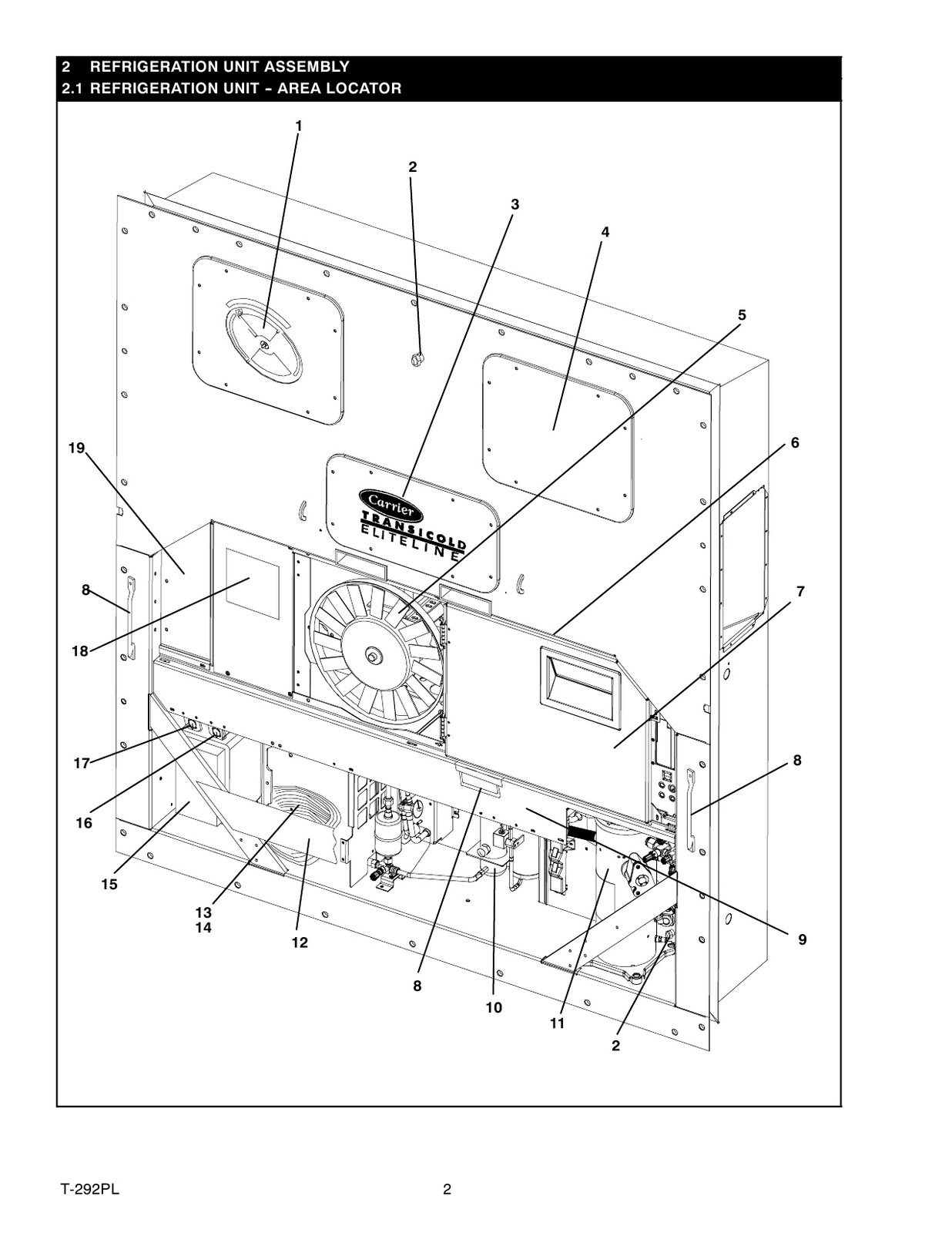
CARRIER 69NT40 SCROLL REEFER MICHINERY ELEPHANT CHART FOR SURVEYOR REFERENCE

Download to your HD to better preview


Tuesday, April 26, 2011

DAIKIN LXE10E REEFER PART LOW ELEPHANT CHART FOR SURVEYOR REFERENCE

Download to your HD for better Preview


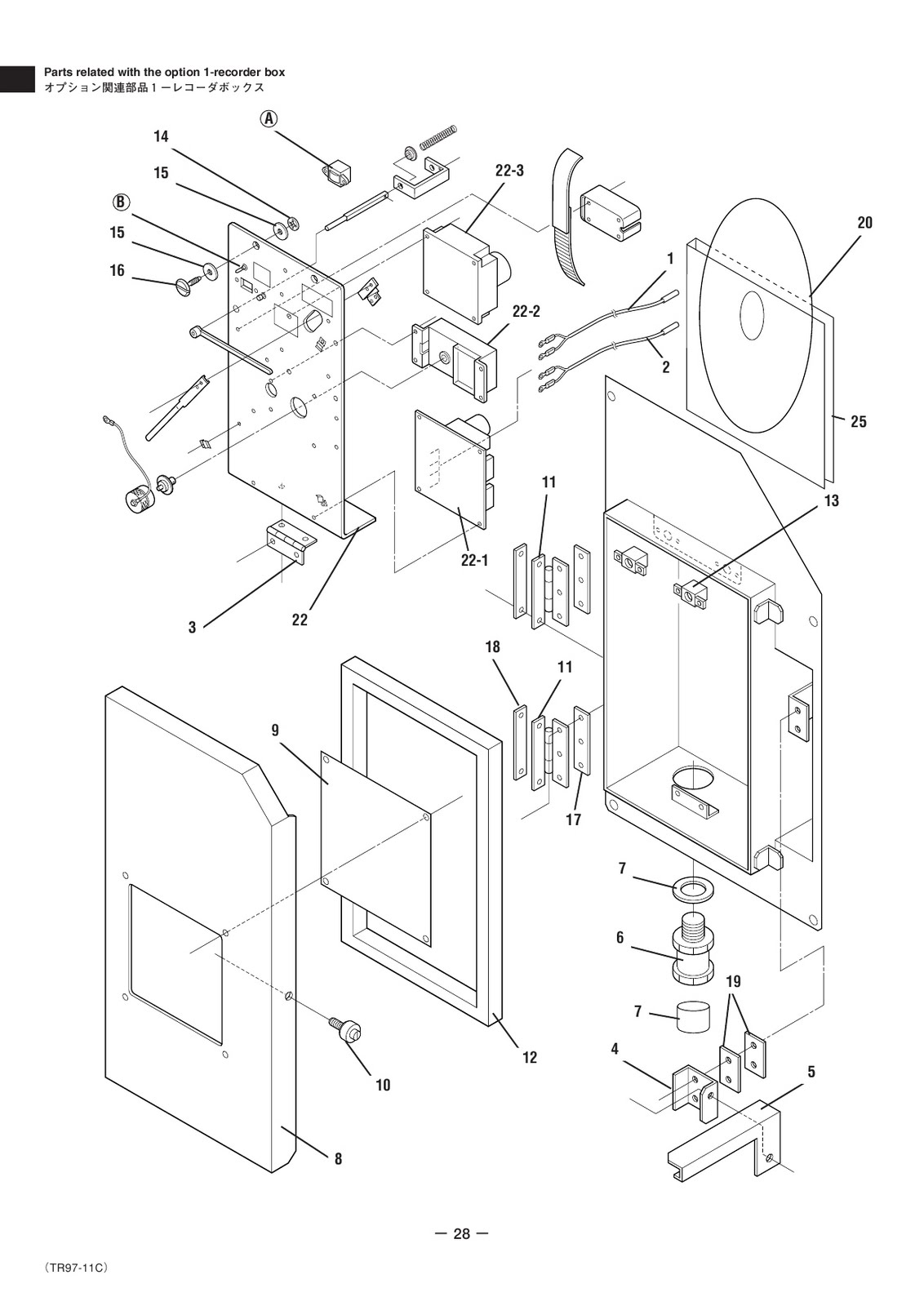
DAIKIN LXE10E REEFER MACHINERY ELEPHANT CHART FOR SURVEYOR REFERENCE

Download To Your HD For Better Preview